Device Code Phishing After EvilToken: The 15-Minute Window Is Gone
Recent device code phishing campaigns turned a niche device-authorization abuse path into a practical MFA-bypass workflow. The real change is not just better lures. It is that attackers now generate device codes in real time, which makes the attack far easier to scale.
Device code phishing used to have a built-in weakness. The attacker had to get a victim to use a short-lived device code before it expired.
The newest campaigns changed that. In a public April 6, 2026 case study, researchers described lures and landing pages that generate a fresh code only after the victim arrives. That turns a narrow timing window into a scalable workflow.
That is why this matters. This is not just another fake login page story. It is a way to abuse a legitimate device-authorization path so the user does the dangerous part themselves.
How The April 2026 Campaign Works
Classic phishing usually asks the user to trust a fake destination. Device code phishing feels more convincing because the workflow can end on a real identity-provider page. The malicious step is the handoff that gets the victim there and the instructions wrapped around it.
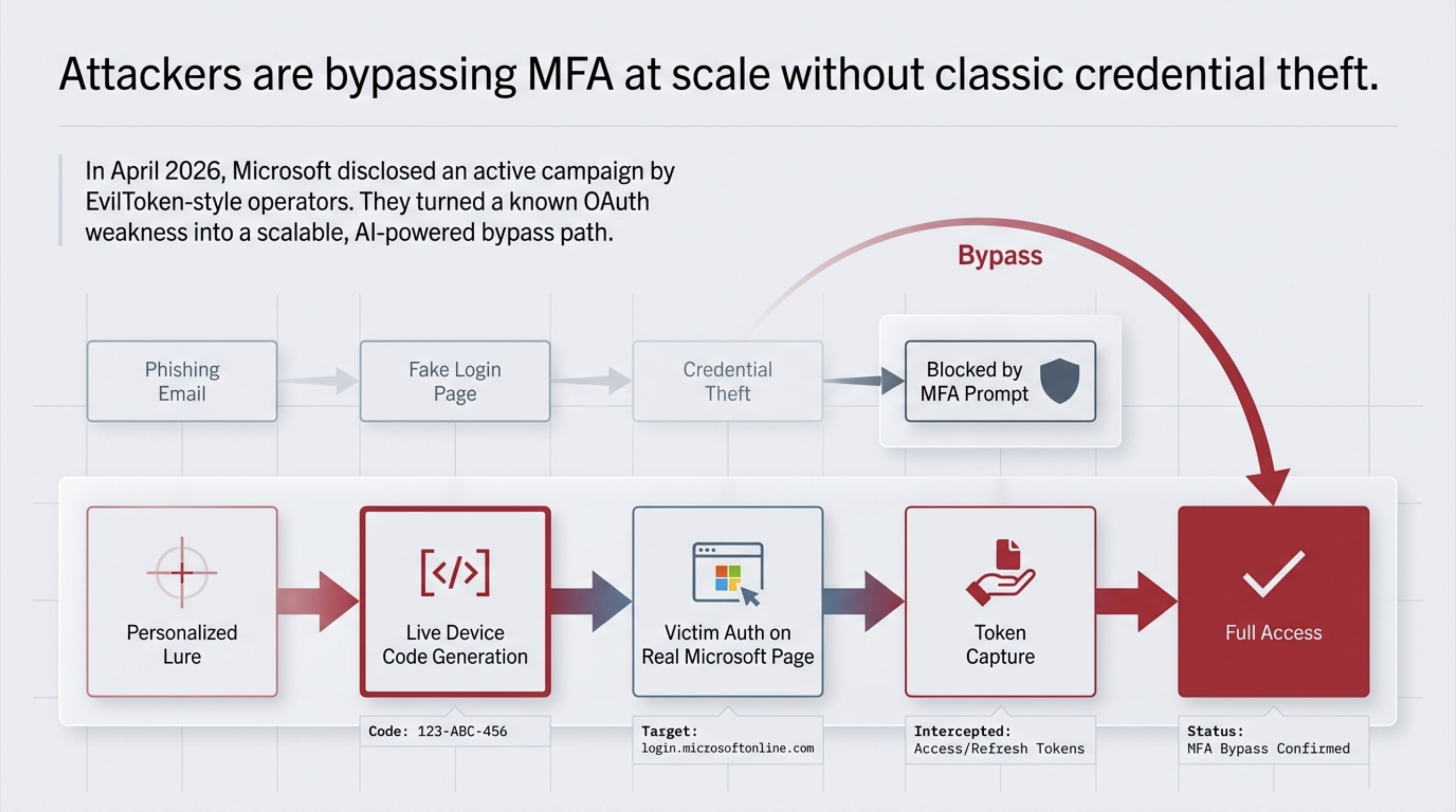
- The victim receives a personalized business lure, often framed as a document, invoice, or approval workflow.
- The lure opens a polished landing page that imitates a familiar enterprise sign-in flow and pushes the user to continue.
- The attacker backend requests a fresh device code in real time instead of reusing an old one.
- The victim enters the code on a legitimate device login page and completes MFA.
- The attacker receives usable tokens and moves straight into post-compromise activity such as mailbox access, Graph reconnaissance, or inbox-rule abuse.
What Changed From Older Device Code Attacks
The old limitation was time. Pre-generated codes expired quickly, which made campaigns harder to run at scale. Real-time code generation removes that problem.
That is the practical shift defenders should remember. The technique is no longer fragile. Attackers can wait for a live victim, generate a valid code on demand, and keep the entire interaction inside a workflow that looks familiar.
What Security Teams Should Do Now
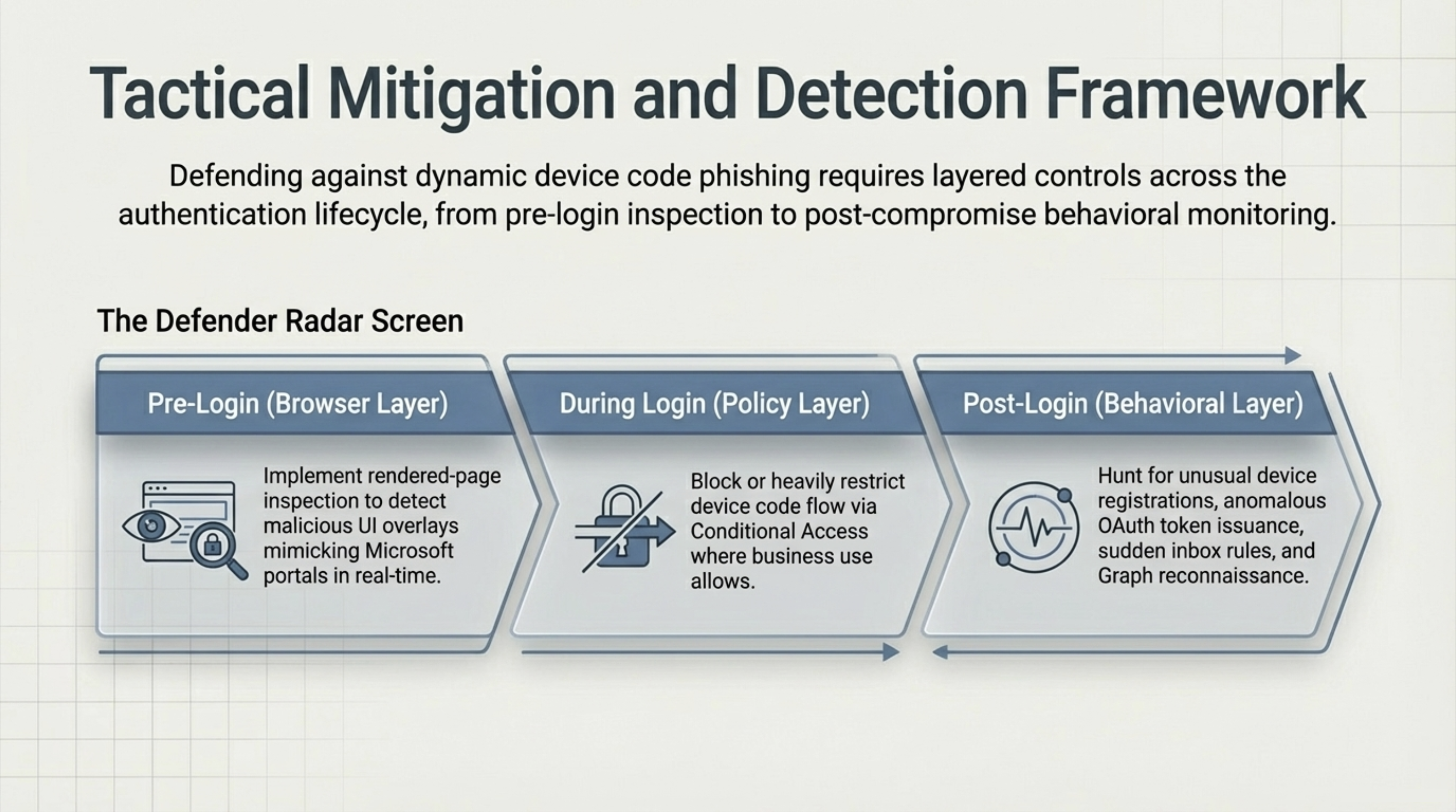
- Restrict device code flow where possible. If the business does not need it, remove the path attackers are abusing.
- Look for token-centric post-compromise behavior. Inbox rules, strange device registration, and unusual Graph access matter more than password reset alone.
- Teach users that a real login page can still be part of a phish. The problem may be the handoff and the instructions, not the last domain they see.
- Inspect the rendered page journey, not just the opening URL. The dangerous signal is often in the browser session itself.
Where Secto Fits
This attack does not depend on a single fake page. It depends on a deceptive browser handoff that convinces the user the next identity step is expected. That is where Secto is useful.
- Secto adds a browser-side checkpoint before the user is pushed from a deceptive landing page into a trusted authorization flow.
- It helps security teams judge the handoff pattern itself, including overlays and deceptive instructions that wrap a legitimate identity-provider step.
- It gives defenders a practical way to interrupt OAuth-linked phishing chains before a fresh device code turns into a usable session.