For years, defenders took some comfort in the visible flaws of phishing sites. The branding was off. The page structure was sloppy. The HTML looked cheap. That comfort is fading fast.
Okta's July 2025 research on abuse of Vercel's v0 highlighted a more important shift than AI-written lure copy. Attackers can now use generative web-building tools to produce polished, brand-specific login clones almost on demand. Axios summarized the practical implication bluntly: some of these sites can be assembled in roughly thirty seconds.
That means the phishing bottleneck has changed. The cost of making a believable fake sign-in page has dropped, while the visual quality has gone up.
Why This Matters More Than AI-Written Emails
Security teams have spent a lot of time debating whether AI makes phishing emails more persuasive. That matters, but it misses the infrastructure story. The bigger advantage may be the speed with which attackers can build, test, and replace the page that actually harvests credentials.
A fake login used to require at least some design effort, HTML copying, asset gathering, and basic deployment work. Now the page factory itself can be partially automated.
The New Prompt-to-Phish Pipeline
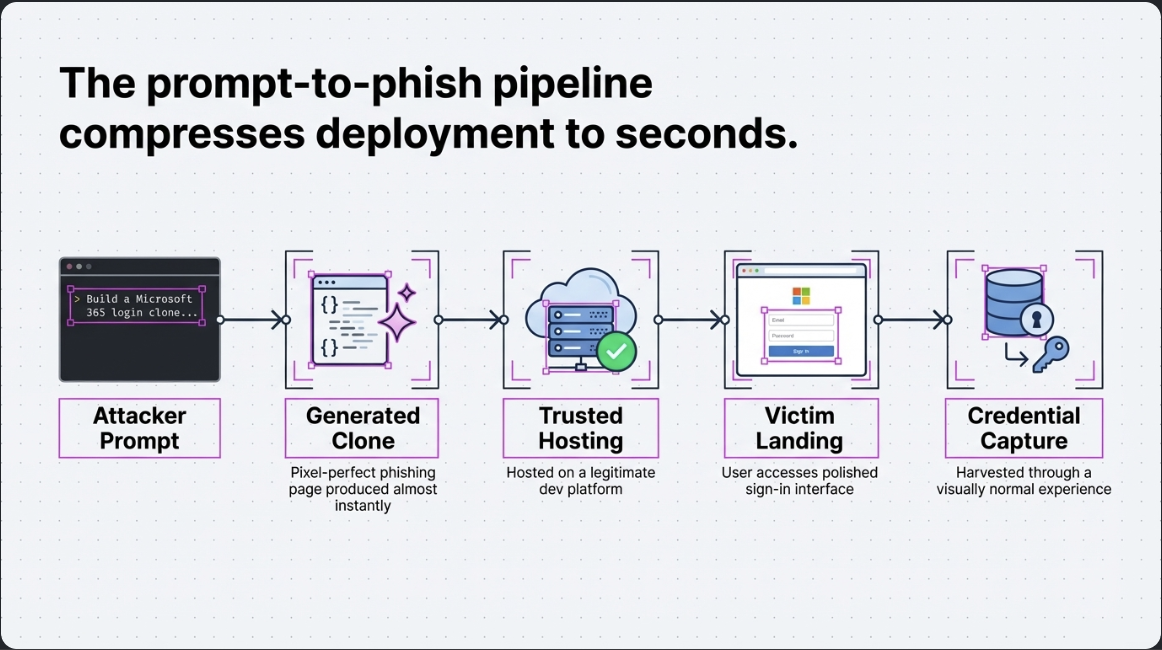
- The attacker prompts a GenAI web-building tool to reproduce a known sign-in experience.
- The tool produces a high-fidelity page quickly, often with the right spacing, branding, and interaction cues.
- The attacker hosts the resulting assets on a trusted development platform or related cloud infrastructure.
- The victim lands on a page that looks operationally normal enough to pass a visual inspection.
- Credentials are harvested through a browser experience that feels polished rather than suspicious.
That speed changes campaign economics. If a domain gets burned, the page can be rebuilt. If one clone underperforms, another can be generated. The attacker is iterating on infrastructure, not just messaging.
Why Trusted Hosting Makes It Worse
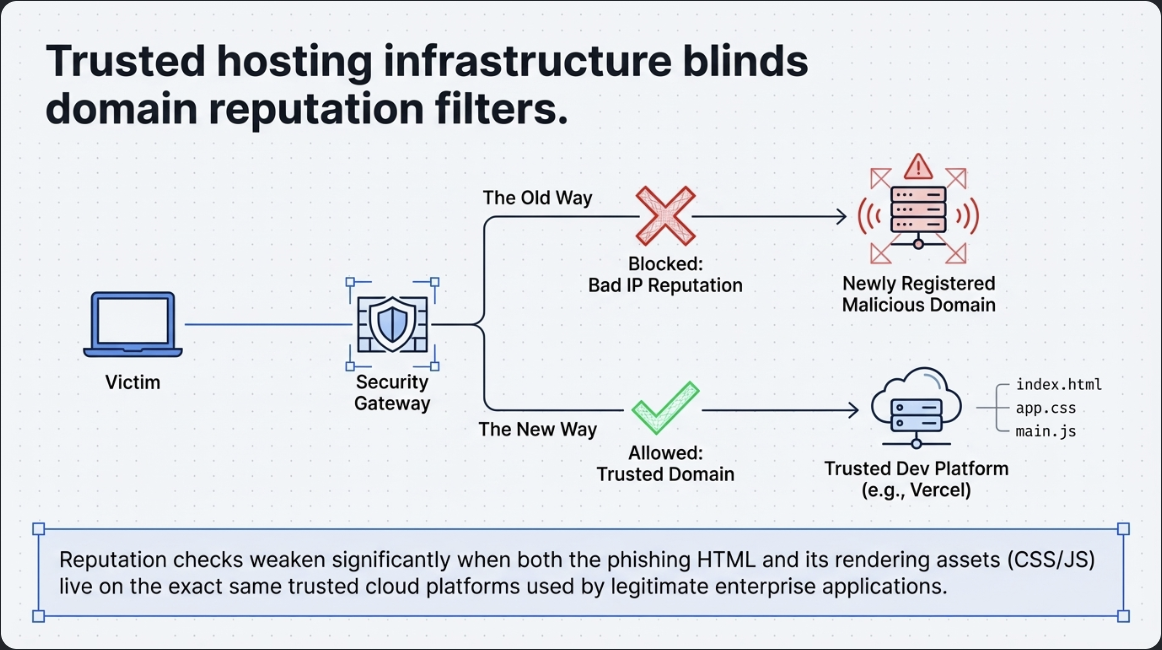
Trusted cloud and developer platforms complicate older detection approaches. Reputation checks get weaker when the phishing page and supporting assets are served from infrastructure users and defenders already recognize. The page may look professional because the tools used to build and host it are professional.
That is why "this page looks real" is becoming a useless heuristic. GenAI lowers the effort needed to create a page that feels visually consistent with the real service.
What Defenders Should Change
- Expect much faster phishing infrastructure turnover. Blocklists and retrospective takedowns will age out even faster.
- Assume polished design means nothing. Visual quality is no longer evidence of legitimacy.
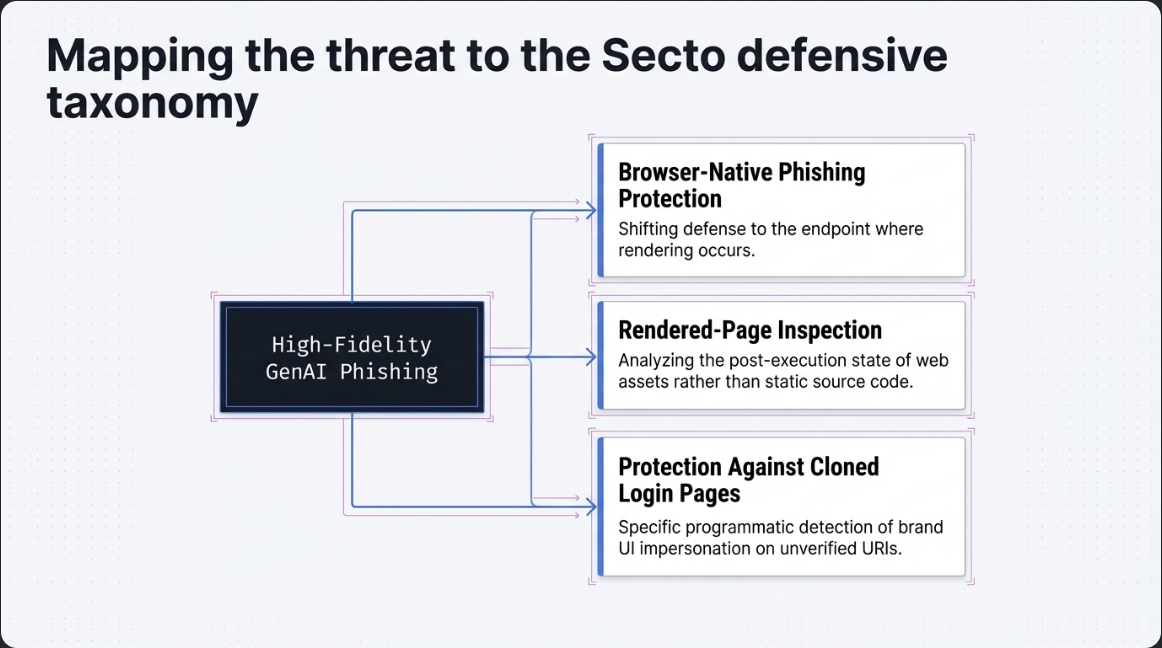
- Prioritize rendered-page judgment. Controls need to inspect the live page state, not just the reputation of the host.
- Focus on clone detection. The key problem is not that the page is ugly. It is that it is convincing enough to be trusted.
How Secto Helps Stop This Attack
GenAI-created phishing pages still have to win in the browser. That is where Secto is designed to operate.
- Secto provides browser-native phishing protection that evaluates the rendered sign-in page in context.
- It helps catch high-fidelity cloned login pages even when they are visually polished and hosted on infrastructure with better superficial trust signals.
- It shifts the decision point from "does this host look reputable?" to "is this login experience legitimate at all?"