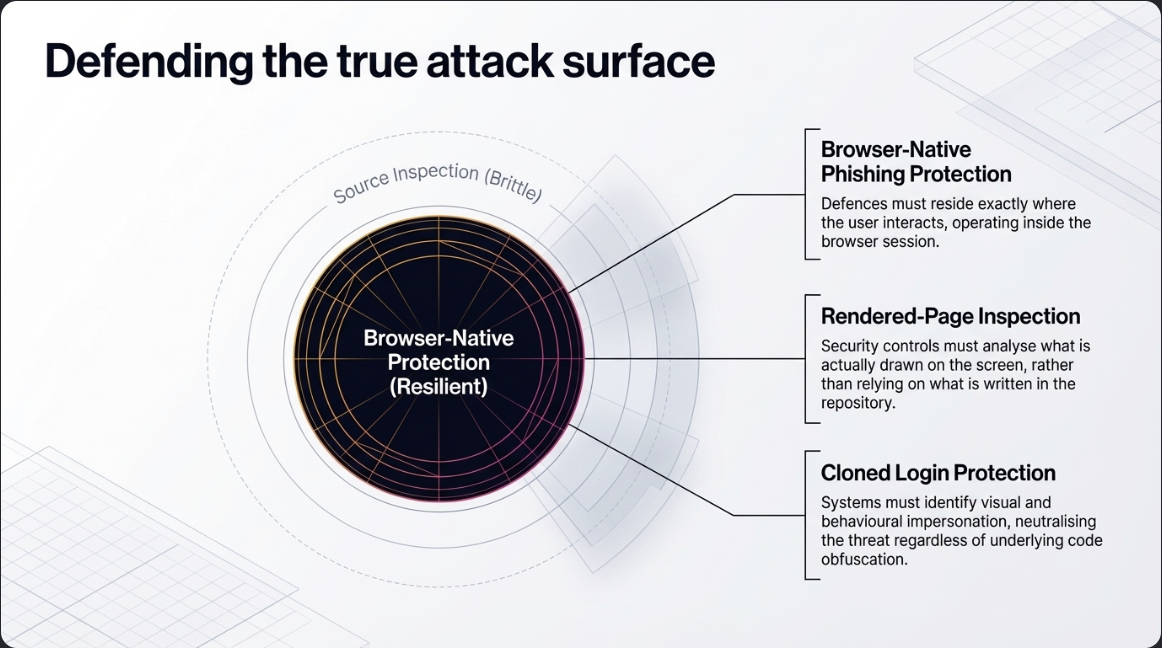
GhostFrame is not interesting because it is flashy. It is interesting because it cleanly exposes the gap between what many security tools inspect and what users actually see.
Barracuda's December 2025 reporting described a phishing kit that keeps its outer HTML looking relatively harmless while the real phishing experience is assembled through hidden rendered content. Malwarebytes reinforced the scale of that activity days later. The core lesson is straightforward: source inspection is no longer enough when the attack is optimized for the browser's rendering path.
That is why GhostFrame matters beyond one kit. It shows where phishing authors are investing. They are engineering for the session the victim experiences, not for the static source code a scanner prefers to read.
What GhostFrame Actually Changes
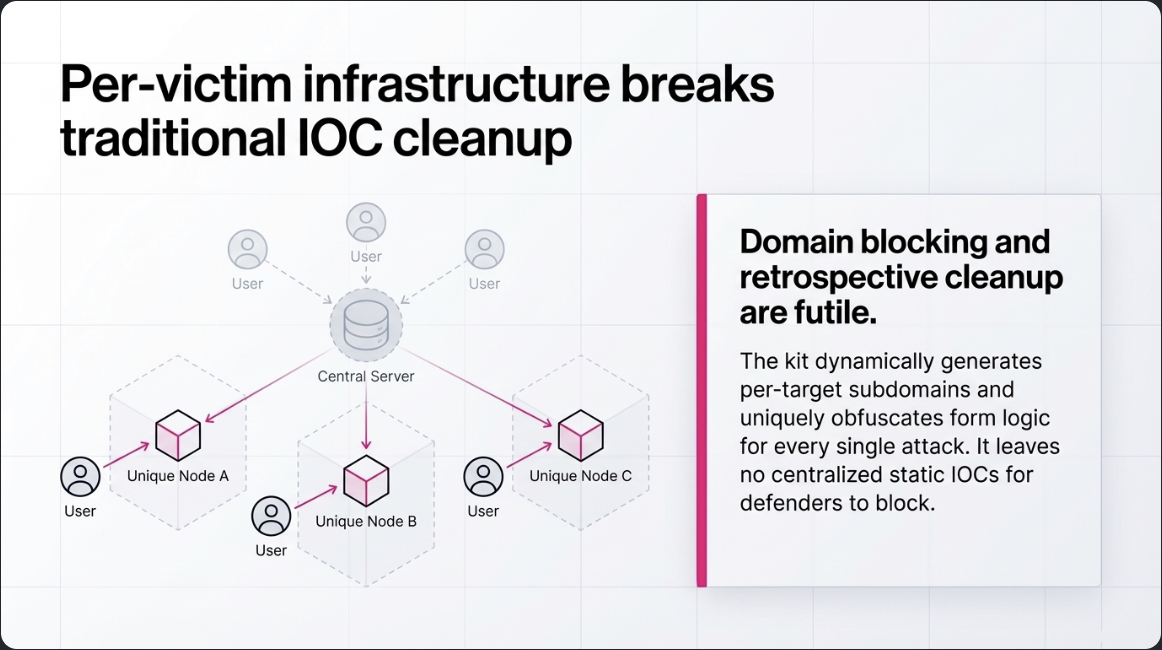
Traditional phishing analysis often begins with the raw HTML, the URL, and a few static indicators. GhostFrame weakens all three. The outer page can look clean. The real credential collection logic can sit behind framed content or staged fetches. Infrastructure can rotate on a per-victim basis, leaving retrospective cleanup with little durable value.
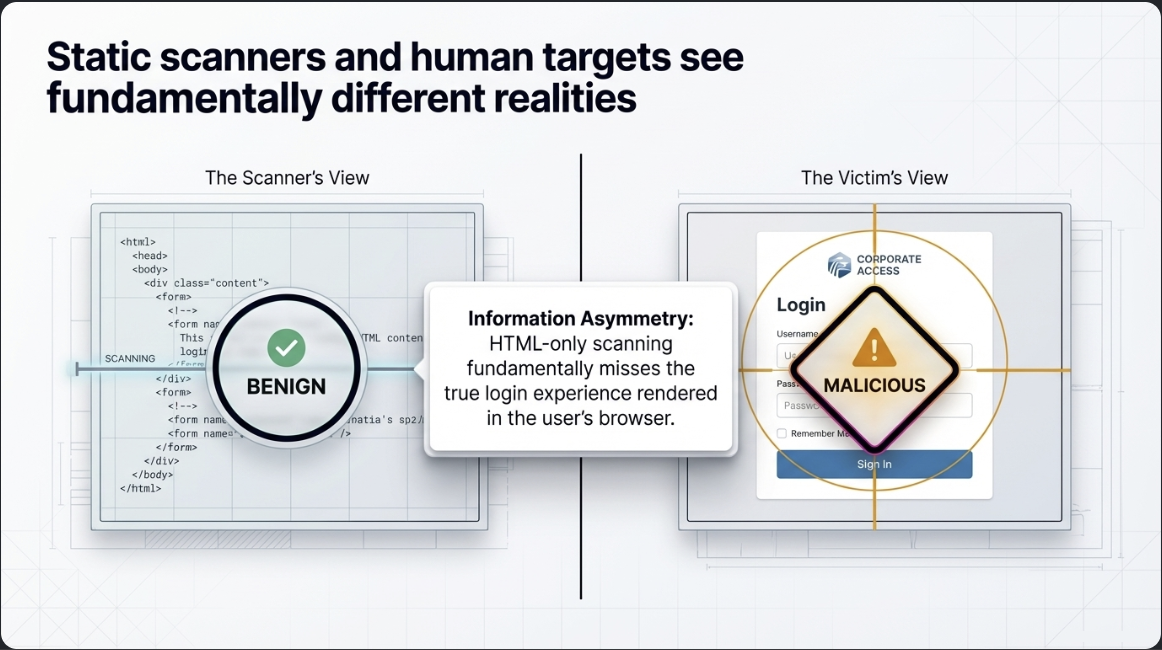
The result is a simple but painful mismatch. The scanner studies the wrapper. The victim interacts with the rendered phish.
Why HTML-Only Inspection Breaks Here
- The visible page is not the whole page. Hidden iframes and staged content loading can keep the outer document deceptively clean.
- The infrastructure is highly disposable. Per-target subdomains and rotating delivery paths reduce the shelf life of domain-based detections.
- The decisive signal is interactive. The meaningful evidence appears when the page renders and the victim is asked to type into a trusted-looking workflow.
GhostFrame is a good reminder that phishing kits do not need to beat every scanner. They only need to make static analysis confidently wrong often enough.
The Real Defensive Lesson
This is not just a story about one stealthy kit. It is a story about how phishing is moving toward browser-native deception. The page that matters is the one rendered in session, with all its framed content, visual polish, and interaction cues intact.
If your controls cannot see that state, they are judging a different artifact than the one your user is trusting.
What Teams Should Do Now
- Shift phishing detection toward rendered-page inspection. The browser view is the attack surface that matters most in kits like GhostFrame.
- Treat iframe-heavy login flows with suspicion. Hidden layered content can be a delivery mechanism for deception, not just a web-development detail.
- Assume domain-only blocking will age badly. Per-victim rotation and infrastructure churn are now design features.
- Prioritize in-session controls. The right moment to intervene is when the fake page is rendered, not after the credentials are already gone.
How Secto Helps Stop This Attack
GhostFrame succeeds because it uses the browser as the deception engine. That is exactly why Secto is designed to inspect the browser session itself.
- Secto provides browser-native phishing protection that focuses on the page the user actually sees.
- It helps identify cloned login experiences even when the outer page looks benign or incomplete to static scanners.
- It gives defenders coverage aligned with the rendered attack surface instead of the source-only wrapper.