TA416 is worth watching for a simple reason: the group keeps changing the wrapper without changing the mission.
In public April 1, 2026 reporting on renewed European government targeting, the actor moves between fake challenge pages, OAuth-linked handoffs, and newer downloader chains while still driving toward the same espionage outcome. That makes the campaign useful beyond one actor profile. It shows how fast serious phishing operators can rotate delivery when defenders focus too narrowly on yesterday's lure.
It also shows something else. State-linked phishing often follows the news cycle more closely than defenders admit.
Why The Timing Matters
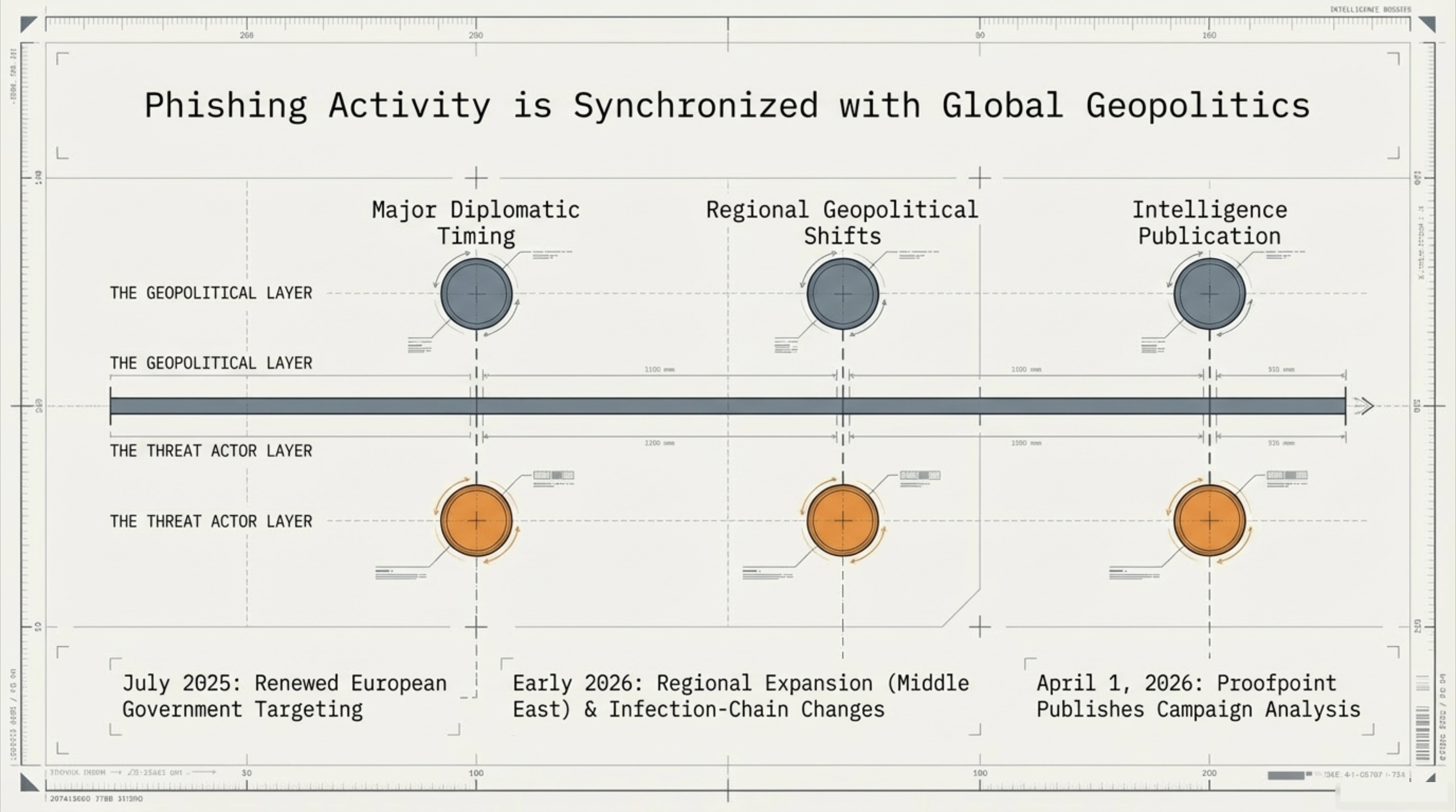
The reporting tied TA416 activity to real diplomatic and geopolitical context. European targeting resumed after the July 2025 EU-China summit. Later activity tracked other moments of regional tension.
That is not just an attribution detail. It is a defender signal. High-profile summits, policy disputes, and military events can raise the chance of targeted phishing long before a user clicks anything.
What Teams Should Do Differently
- Raise alertness around geopolitical flashpoints. Timing can be an early clue for diplomatic and policy-focused targeting.
- Track delivery behavior, not just lure themes. The actor may abandon one technique quickly and keep the rest of the campaign logic intact.
- Watch browser-visible deception carefully. Fake challenge pages and trusted-looking handoffs are designed to lower suspicion at exactly the point of interaction.
- Use pre-delivery recon as a hunting lead. Early campaign activity can be more stable than the phishing page itself.
How The Delivery Layer Kept Changing
The delivery layer kept evolving. That is the important operational lesson.
- Some waves used fake challenge pages that looked like security friction the target was expected to accept.
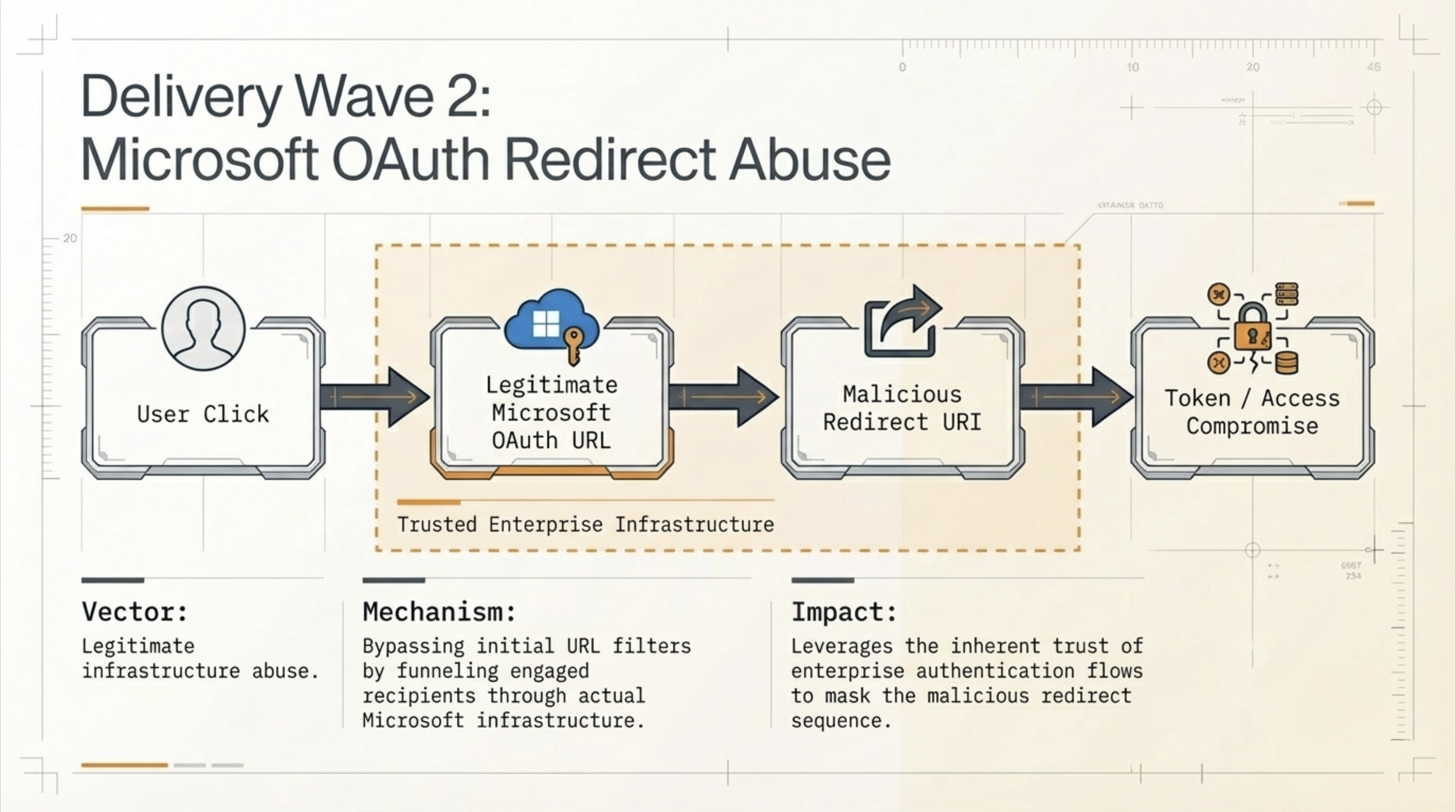
- Other waves abused OAuth-style handoffs to move the victim through a more trusted-looking flow.
- Later chains used downloader logic and supporting payload delivery methods that changed again.
- The final objective stayed steady: enable espionage activity through reliable follow-on access.
That pattern is common in high-discipline phishing operations. The lure changes faster than the mission.
The Defender Opportunity Most Teams Miss
TA416 also reportedly used reconnaissance activity before the main delivery stage. That matters because it creates a practical window for defenders to notice interest before full malware or credential theft is underway.
Security teams that only measure success at the final payload stage are often too late. Targeted phishing should be treated as a campaign with preparation, testing, delivery, and follow-on access, not as a single email event.
Where Secto Fits In A Campaign Like This
TA416 is a reminder that targeted phishing still needs a believable interaction point. The message may be diplomatic, the infrastructure may be short-lived, and the end goal may be espionage, but the victim still has to trust what appears in the browser.
- Secto helps analysts evaluate fake challenge pages and identity handoff screens that are built to feel routine to a targeted user.
- It strengthens protection against deceptive browser moments even when the broader campaign is part of a state-linked collection effort.
- It gives defenders a practical control point in the one part of the chain TA416 still cannot skip: the page the victim has to accept.