Defenders still tend to separate trusted identity traffic from phishing traffic. That distinction is getting weaker.
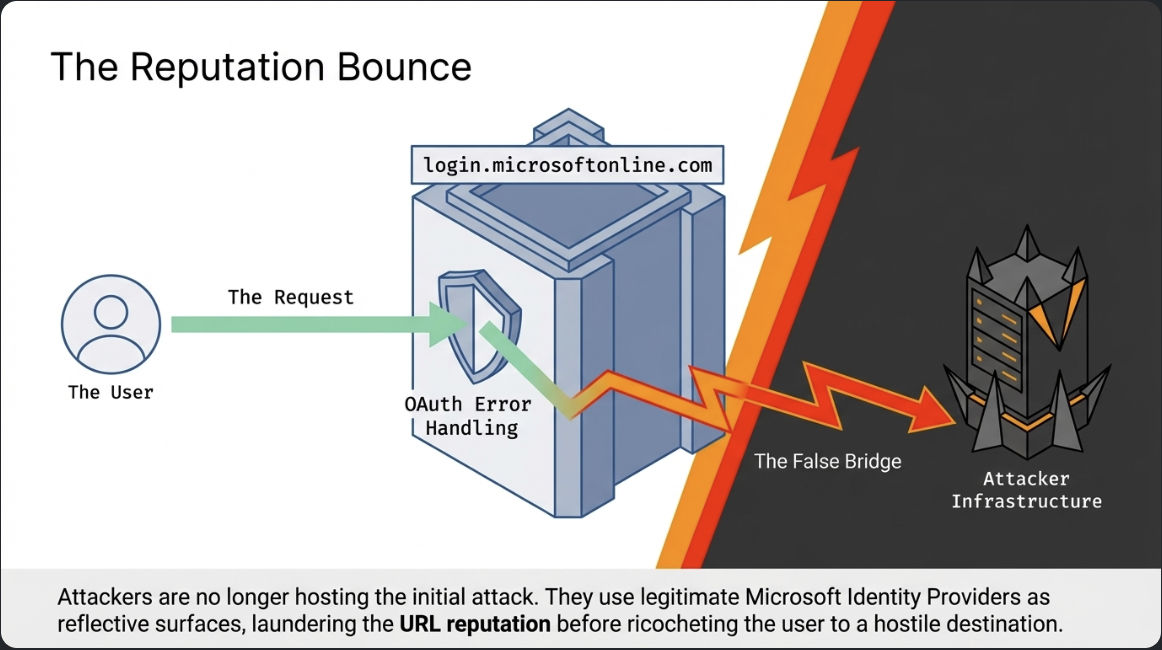
Recent Microsoft and Proofpoint reporting shows attackers increasingly abusing legitimate Microsoft identity flows as the first stage of a phishing chain. The user may begin on a real Microsoft page, see a plausible consent or authorization step, and only later get handed into a fake login or malware-delivery page. By then, the browser transition itself has already done the psychological work.
That is why trusted redirects matter. The old model assumed a bad link led directly to a bad destination. The new model borrows trust from Microsoft first, then spends it on the rendered page that follows.
Why This Changes the Defender Problem
If the first visible step in the chain lives on a legitimate Microsoft identity surface, domain reputation loses explanatory power. The user is not being asked to trust an obviously strange host immediately. They are being guided through a sequence that looks operationally normal until the final handoff.
That makes browser context more important than pre-click classification alone. The question is no longer just whether the opening URL was trusted. The question is where the browser ultimately lands and what page is rendered when the user is asked to act.
The Trusted Redirect Attack Chain
- A lure email delivers a Microsoft OAuth or authorization URL that looks compatible with a normal enterprise workflow.
- The victim lands on a legitimate Microsoft login or consent surface and interprets that as confirmation that the process is safe.
- The browser is redirected through OAuth error handling, app impersonation, or standards-compliant redirect logic into attacker-controlled infrastructure.
- The final rendered page presents a counterfeit login, malware-delivery pretext, or live proxy workflow that captures credentials and session context.
This is the critical shift. The most dangerous moment is not the first click. It is the point where a trusted Microsoft journey turns into an untrusted rendered page while the victim still believes they are inside a normal identity flow.
Why OAuth Abuse and AiTM Fit Together
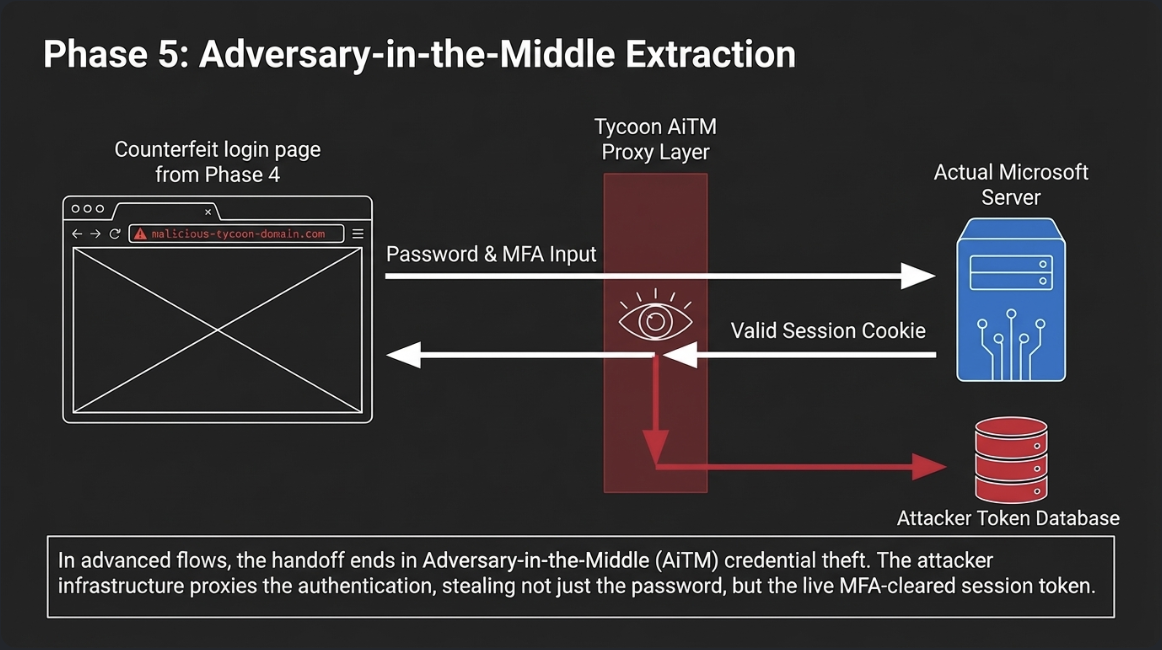
OAuth redirect abuse does not replace adversary-in-the-middle phishing. It can feed it. Proofpoint's reporting on fake Microsoft OAuth apps showed how trust in an enterprise software pretext can be used to steer users into counterfeit Microsoft authentication pages backed by Tycoon-style MFA phishing.
That matters because the attacker does not need to win trust with branding alone anymore. The legitimate identity-provider step has already done part of that work. By the time the victim reaches the hostile render, suspicion is lower and completion rates are higher.
This is exactly the kind of hybrid chain that static controls struggle with. One piece of the journey is legitimate. Another piece is protocol-compliant. The malicious moment only becomes obvious when you inspect the final browser state.
What Security Teams Should Do Differently
- Stop treating Microsoft-hosted identity pages as the end of the analysis. They can be the start of the deception chain.
- Correlate redirects with rendered-page outcomes. The final destination and the page the user sees matter more than the opening reputation score.
- Prepare for blended attacks. OAuth abuse, cloned login pages, CAPTCHA pretexts, and AiTM session theft now overlap in one browser sequence.
- Investigate sessions, not just passwords. If the chain ends in a live proxy, the attacker may leave with reusable session material rather than only captured credentials.
How Secto Helps Stop This Attack
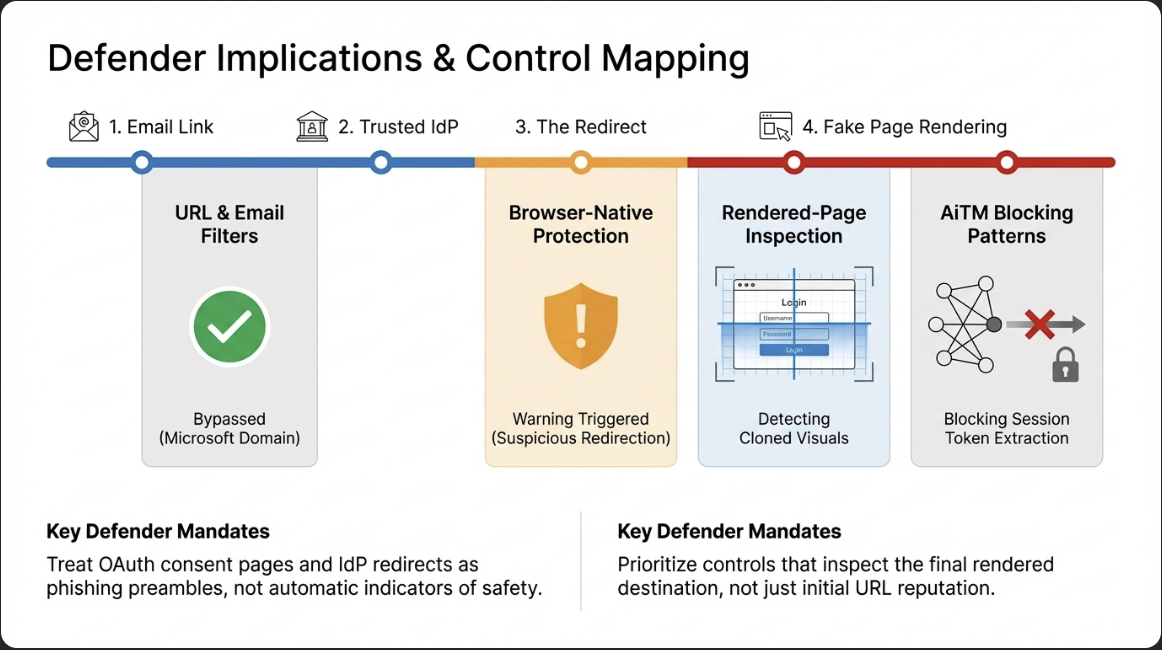
Trusted redirect abuse succeeds when a user reaches a rendered page that looks like the natural next step in a Microsoft login journey. That is why the browser is the correct control point.
- Secto provides browser-native phishing protection that evaluates the actual page a user is about to trust, not just the opening URL.
- It helps detect cloned login pages and adversary-in-the-middle patterns that appear after a trusted handoff.
- It gives defenders a way to stop the hostile render before credentials or session tokens are handed over.