The March 2026 Tycoon2FA disruption was good news. It was not the end of the story.
What matters most is what Tycoon2FA proved. In a public March 4, 2026 write-up on the takedown, the kit reads less like a one-off actor tradecraft note and more like a service catalog for session theft. That pushes phishing from a craft problem into an operations problem.
In plain terms, the barrier to running convincing MFA-bypass phishing is lower than many defenders still assume.
What Tycoon2FA Actually Industrialized
Tycoon2FA did not invent AiTM phishing. What it did was make the model easier to reuse. Operators could stand up polished login pages, relay traffic to real services, and steal authenticated sessions without building the whole stack themselves.
That is the shift security teams should focus on. When session theft becomes a product, defenders should expect more actors to use it, not fewer.
Why MFA Did Not Save The Victim
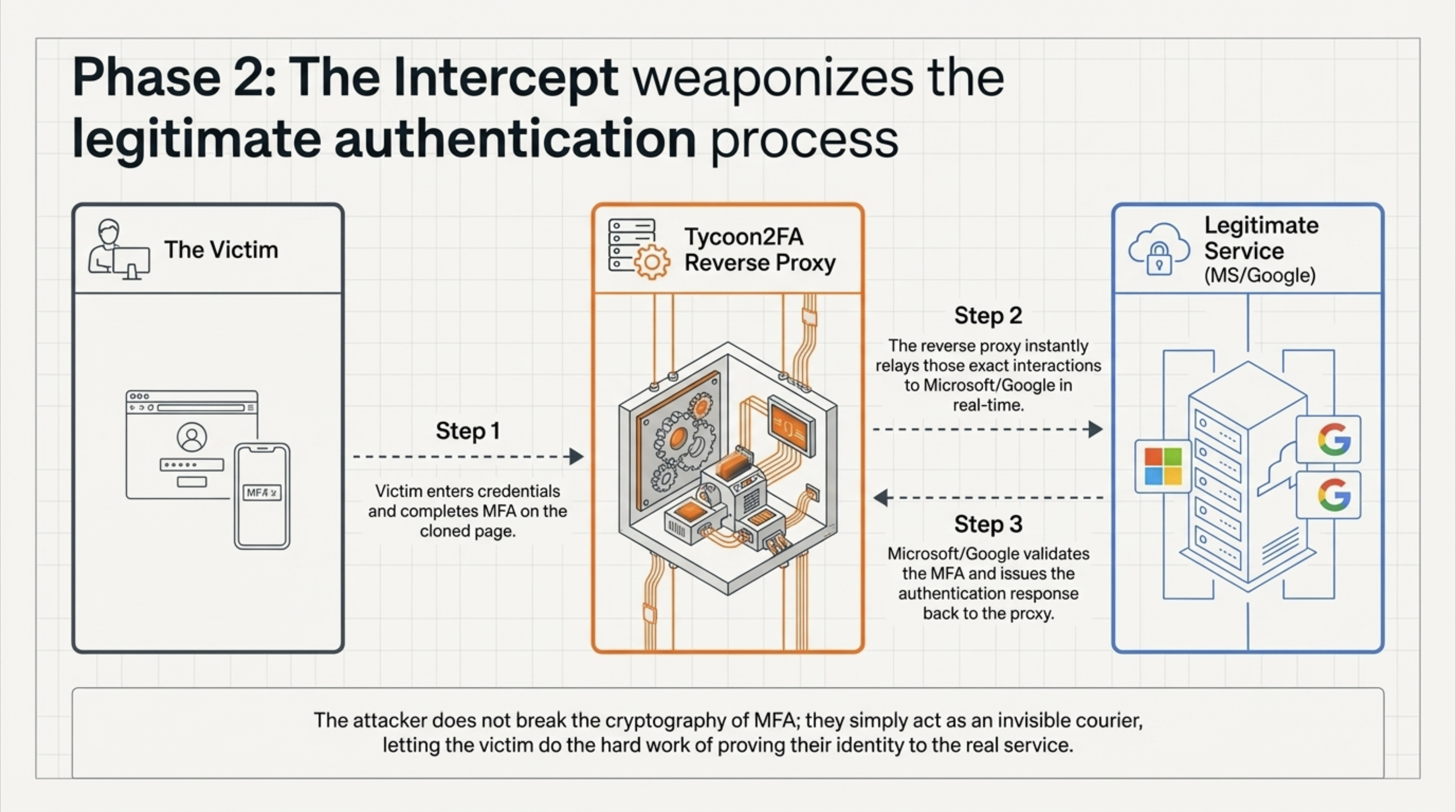
AiTM phishing works by sitting between the user and the legitimate service. The victim still sees a realistic sign-in flow, still types a password, and still completes MFA. The attacker just captures the authenticated session on the way through. That is why password reset alone is often an incomplete response.
Why The Takedown Still Matters
The disruption matters because it exposed the scale and professionalism of the service. Public reporting from March 4, 2026 showed a coordinated effort against a platform that had become a meaningful part of the phishing ecosystem.
But takedowns do not erase demand. They mostly show defenders which model is working for attackers right now.
What Enterprises Should Change
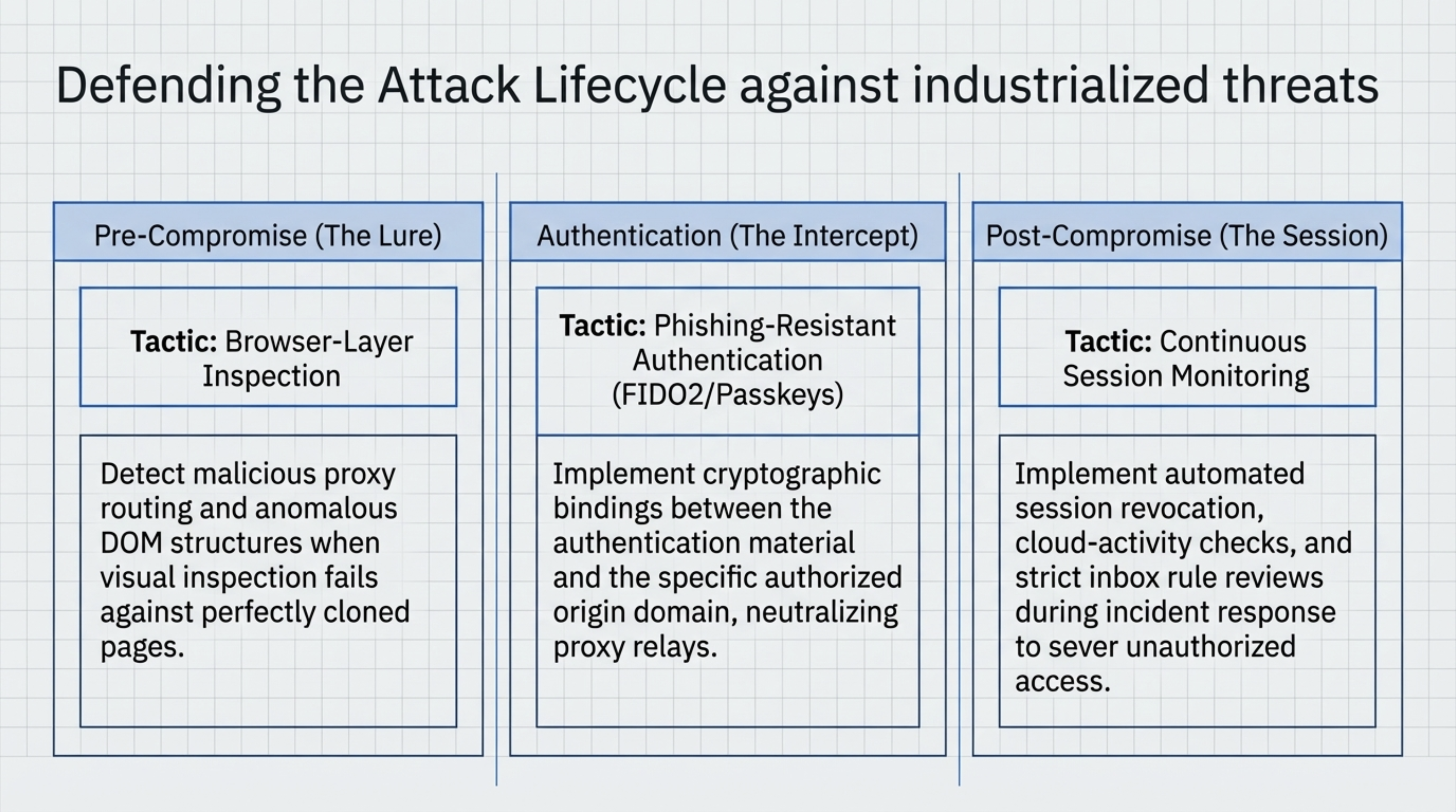
- Treat session theft as a first-class incident type. The attacker may already be authenticated even if the password is changed.
- Prioritize phishing-resistant authentication. Passkeys and FIDO-style methods matter more when reverse-proxy kits are common.
- Hunt for post-login abuse. Mailbox changes, unusual SaaS access, and suspicious token reuse tell you more than the original phish alone.
- Assume polished login pages are easy to rent. A page that looks enterprise-grade is no longer strong evidence of attacker sophistication.
Where Secto Fits In This Model
Tycoon2FA-style attacks win by capturing a usable session at the point of interaction. The user trusts a login page, finishes MFA, and the attacker walks away with the value. Secto helps at that exact moment.
- Secto helps judge the live login experience instead of treating a polished sign-in page as automatically trustworthy.
- It strengthens protection against reverse-proxy phishing patterns that are designed to look normal right up to session theft.
- It gives defenders a browser-aware control for the exact interaction Tycoon2FA turned into a rentable service.