VENOM is interesting because the QR code is not just a QR code. It is an evasion layer.
Recent public reporting described a closed phishing-as-a-service platform targeting senior executives across multiple industries. The lures impersonated document-sharing notifications and used QR codes built from Unicode block characters instead of standard image files.
That detail matters. If a security tool expects the risky QR code to arrive as an image attachment, a rendered HTML pattern can shift the detection problem into the browser and the mail client.
Why The Unicode QR Trick Matters
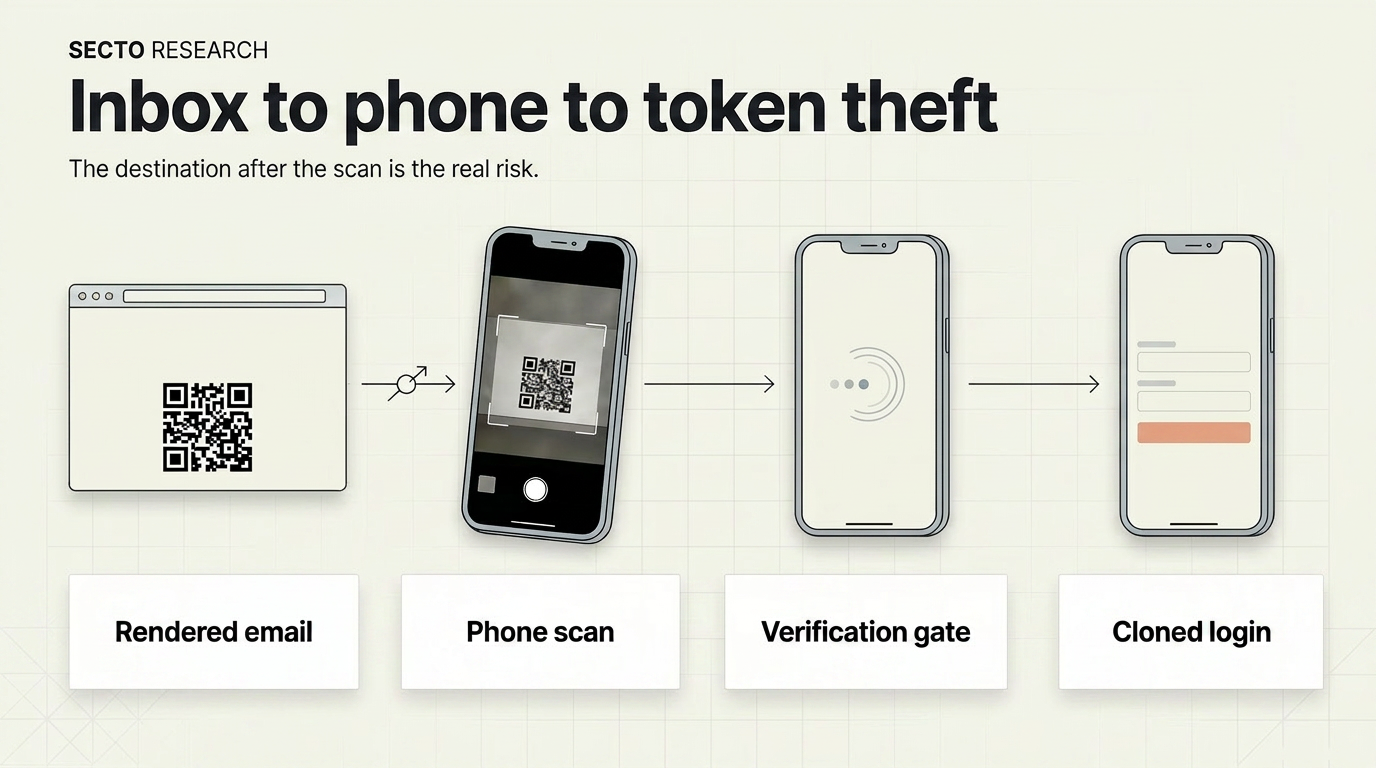
Most QR phishing already benefits from a device handoff. The victim reads email on one screen, scans with a phone, and lands in a different security context. VENOM adds another layer by rendering the code from characters rather than embedding a conventional QR image.
That makes the lure harder to treat as a normal image-based QR artifact. It also reinforces the attacker goal: move the executive from a monitored corporate inbox into a mobile flow where the destination is harder to inspect before the user acts.
The Executive Targeting Is The Point
The campaign reportedly focused heavily on C-level and director-level targets. That changes the risk. Executive accounts often have broader access, more sensitive correspondence, and stronger social leverage if compromised.
A generic phishing lure asks whether someone will click. An executive-targeted lure asks whether the message feels close enough to a real board, finance, or document-review workflow to make the scan feel routine.
What Happens After The Scan
The reported flow used a fake verification checkpoint to filter bots, scanners, sandboxes, and researchers before presenting the phishing workflow to real targets. After that, victims could be pushed into credential theft, MFA relay, or device-code style token capture.
That makes the QR code only the handoff. The real attack is the controlled browser journey after the scan.
What Defenders Should Change
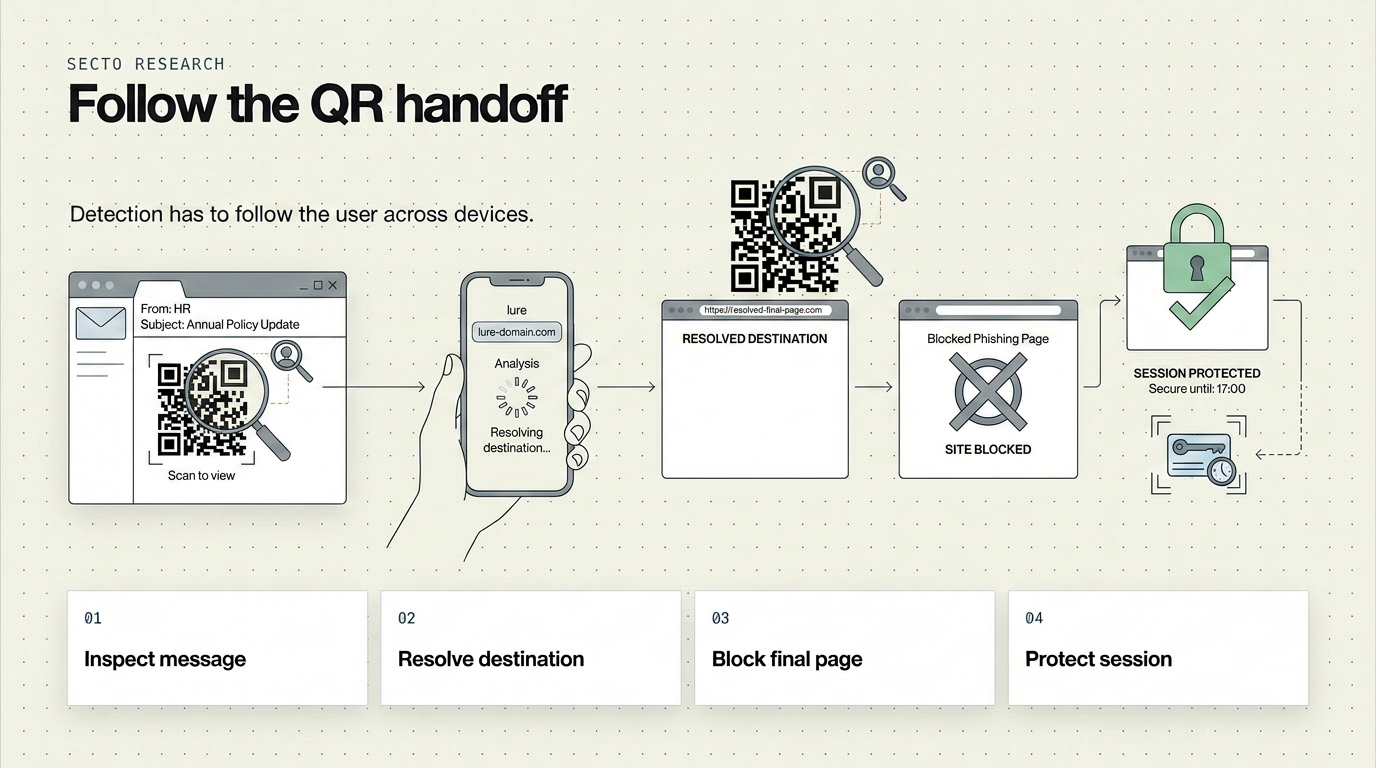
- Inspect rendered messages, not only attachments. A QR pattern can be built in HTML instead of delivered as a file.
- Treat mobile handoff as a risk moment. The destination should be checked before the phone becomes the authentication path.
- Put stronger controls around executive accounts. Passkeys, stricter session policies, and tighter app access reduce the value of a successful scan.
- Watch fake verification checkpoints. They are often used to keep automated analysis away from the final phishing page.
Where Secto Fits
VENOM-style QR phishing wins by moving the user into a browser journey that feels legitimate after the scan. The email lure matters, but the decisive moment is the rendered page that asks the user to continue.
- After the scan, Secto evaluates the final browser destination rather than stopping at the original email message.
- That matters when fake verification pages and cloned login experiences appear only after the mobile handoff.
- The control point follows the user across email, mobile, and the identity page where credentials or tokens are requested.